
Traveling for Tea: Drinking Atay in Morocco - The Number E Tea Company

Issue No. 24
Exploring Moroccan culture one glass of mint tea at a time
For many years, I’ve wanted to immerse myself in Moroccan tea culture. Right up until I came across some gloomy reviews from travellers who’d visited the country.
Was I going to reconsider, change my plans and find somewhere else to go? With my flight already booked, that wasn’t an option. Not to mention the fact that I was in desperate need of a vacation.
Recognizing that I might have made a mistake, I immediately began exploring alternatives and considered crossing into Spain after landing in Casablanca. A few weeks later, unmotivated but hopeful, I drove to the airport and prayed that all would go well once I landed. I was still going to learn about tea after all.
A Brief History of Moroccan Tea
Moroccans' hospitality traditionally involved offering camel’s milk to guests. But it all changed in the early 18th century when Queen Anne of England, in an attempt to secure the release of some English captives, reportedly sent a box of tea to Sultan Moulay Ismail.
The sultan and his courtiers embraced the new drink and immediately started integrating it into court ceremonies.
At first, high import duties and costly transportation made tea an elite tradition in Morocco. After the Crimean War, though, tea became more accessible and was embraced by all social classes.
Even before my trip, I’d read that Moroccans are now among the top per capita tea consumers and that Morocco is a major importer of Chinese green tea - a fact I was eager to observe firsthand.
What I Experienced Drinking Tea in Morocco
From my own experience, it is nearly impossible to avoid drinking tea in Morocco unless you are actively trying to do so. Tea shows up everywhere: on restaurant and café menus, at street vendors’ stalls, and even in the smallest of shops, where the owner always seems to have the tools to make a pot.
I aimed to drink as much tea as possible to make the whole trip a learning experience that would stay with me forever.
After a few days of sipping, I realized there is no single recipe for Moroccan mint tea, also known as Atay. Every cup I tried, from the simplest to the most elaborate, showed me that all versions use green tea, fresh herbs, and sugar, but the preparation is unique to each region.
The differences are subtle and fascinating, sometimes coming from the type of green tea, sugar, or herbs used. My favourite stop was the 1112 Teahouse in Marrakech, which serves 12 teas, one for each of Morocco’s regions.
I still remember the vibrant scene at Jemaa el-Fna market and the cozy tea houses tucked away in Fez's Medina. Each location gave me a new way to experience Morocco’s tea culture.
What Goes Into Moroccan Mint Tea
Tea – Moroccan mint tea, also known as Berber whisky, is most commonly made with gunpowder tea, a variety of Chinese green tea marked by its tightly rolled leaves and strong, charred flavor.
This pairs harmoniously with sugar and mint, creating the classic taste found throughout Morocco. Another variety sometimes used is Chunmee or eyebrow tea - a slightly lighter, more delicate Chinese green tea.
Both gunpowder and Chunmee can be found in Moroccan markets. Chunmee, which was less common where I live, is the kind I brought back home.

A selection of gunpowder and chunmee at a local market.
Mint - The preferred mint for Moroccan tea is Mentha spicata, or Nana mint, a type of spearmint grown throughout North Africa. Its bright, slightly sweet flavour sets Moroccan mint tea apart from other teas.
Nana mint is widely cultivated on Moroccan estates and easily available from vendors who set up stands near markets and medinas. While other mints may be used elsewhere, it is Nana mint that gives this drink its signature aroma and taste.
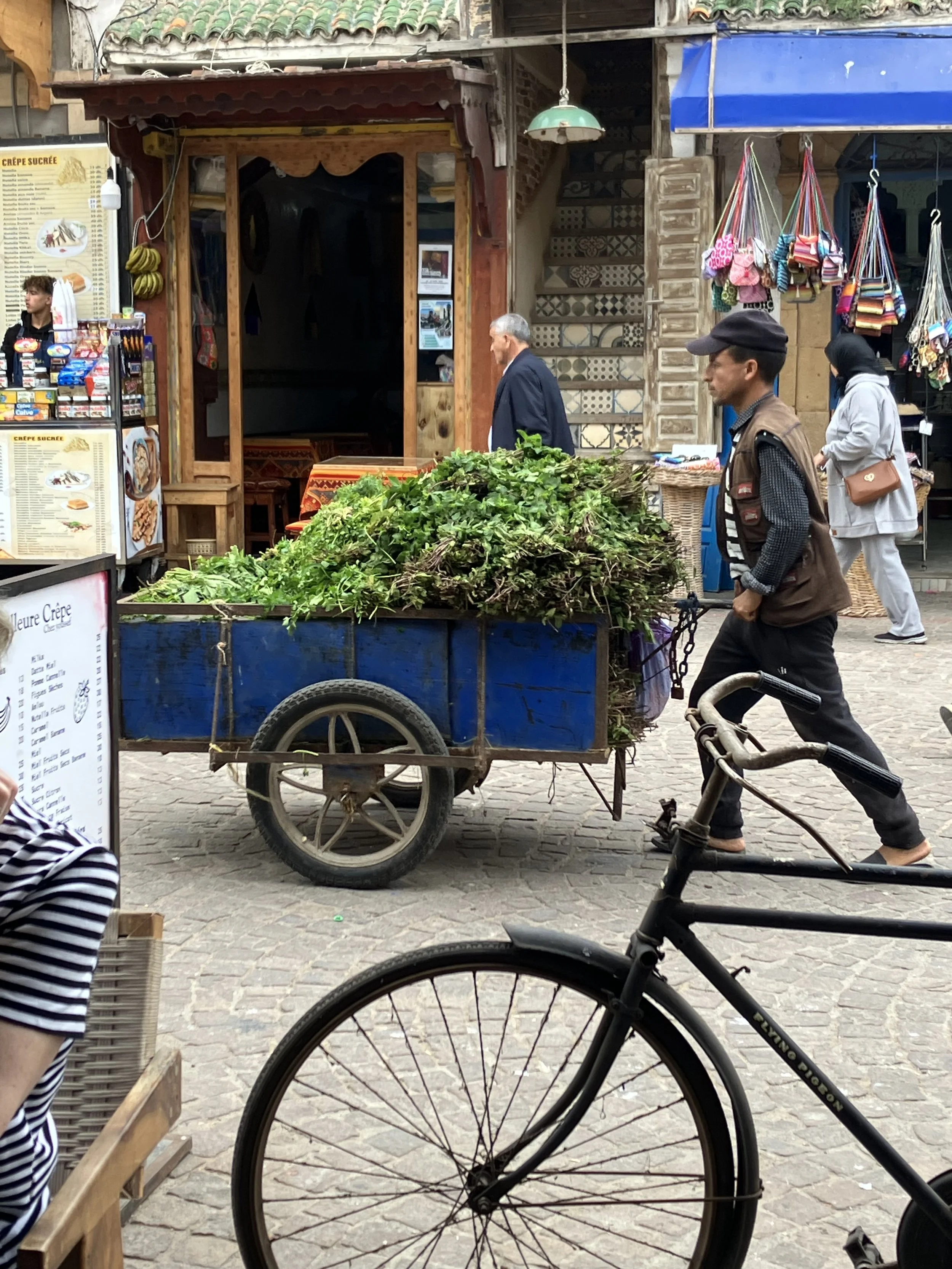
Street vendor selling fresh mint in the streets of Essaouira.
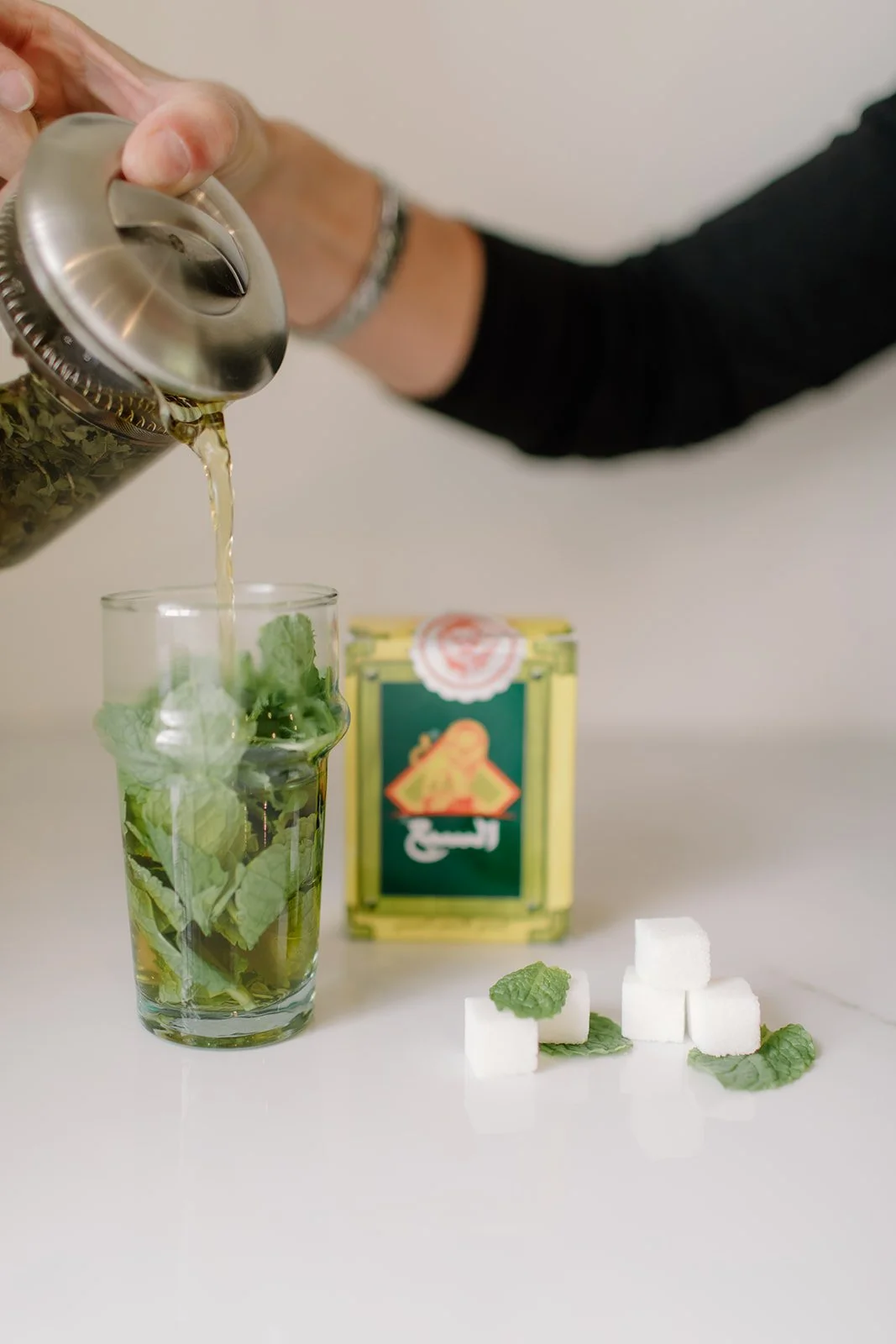
Water - Traditional Moroccan mint tea requires water at a full boil, unlike other green teas. Boiling water extracts the strongest flavours from the tea and herbs, though it can leave the water a bit flat. To address this, the tea ceremony master, or Fannān al-Shāy, pours the hot tea from a height.
This method does not just cool the tea but also reintroduces oxygen, helping restore the water’s freshness and revealing the tea’s full flavour. The resulting foam on top is a sign of well-made Moroccan tea.
Sugar - Moroccan mint tea is typically served very sweet, with large sugar loaf pieces often added directly to the pot. But don't let that deter you from trying it. When offered, you'll usually be asked if you prefer it sweet or unsweetened.
While the sweet version is delicious, I often chose the unsweetened option because I found it more refreshing. The sugar not only balances out the bitterness of the tea and herbs but also brings out the natural mint flavour.
I also came to appreciate how pouring tea from a height is not only a mark of hospitality but a subtle performance showcasing the server’s skill and dedication to guests - a gesture I quickly grew to admire.

Sugar Cubes or “Sucre Lingots” can be easily found on the shelves at the grocery store.
Craving a mint tea? Try our Soothing Organic Mint Tea HERE
Looking Back at My Moroccan Atay Tea Adventure
Reflecting on my trip, I realized that what made Moroccan mint tea truly special was the experience surrounding its preparation and sharing. Not only is Moroccan mint tea distinct in flavour, but its preparation is also considered an art - simultaneously elaborate and graceful.
I distinctly remember visiting a riad where our host prepared tea with meticulous care, ceremonially washing the leaves, adding fresh mint and sugar, and sharing some facts about his country.
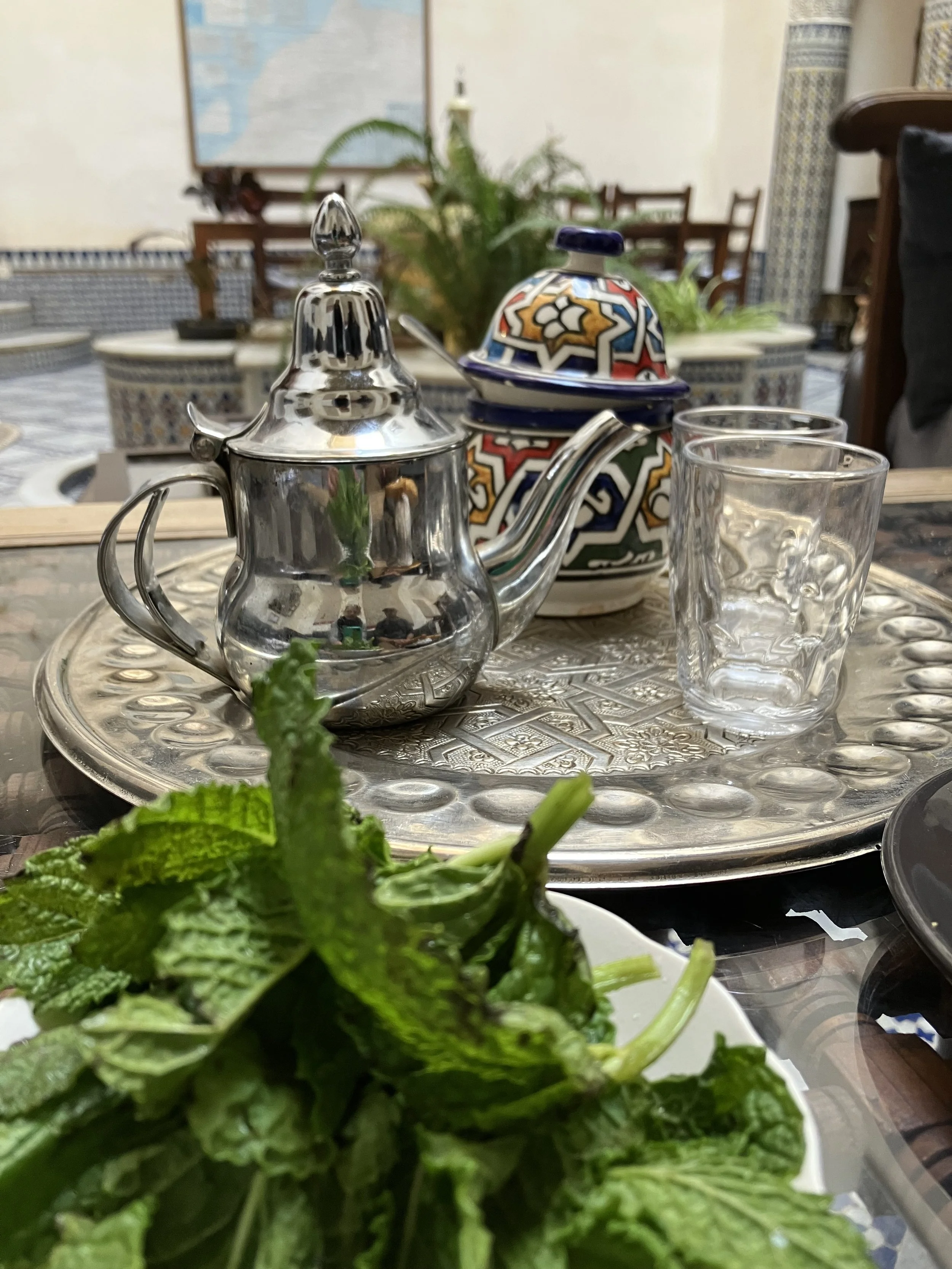
My first Moroccan tea experience at Dar Drissi Guest House in Fes.
This moment was as much about sharing and connection as it was about tasting the aromatic, flavorful tea. This insight helped me appreciate the culture more deeply.
All in all, the trip was a treasure trove of experiences I’m grateful for. Every sip of tea came with a story I’ll never forget.
In the next part of my story, we’ll dive into the art of choosing the perfect Moroccan teapot. Stay tuned to discover what makes one truly stand out!
Want more stories from my tea travels? You may also like:
Touring a Matcha Production Facility in Japan
Traveling for Tea: Tasseomancy in Boston