
Traveling for Tea: Choosing the Perfect Moroccan Teapot - The Number E Tea Company

Issue No. 25
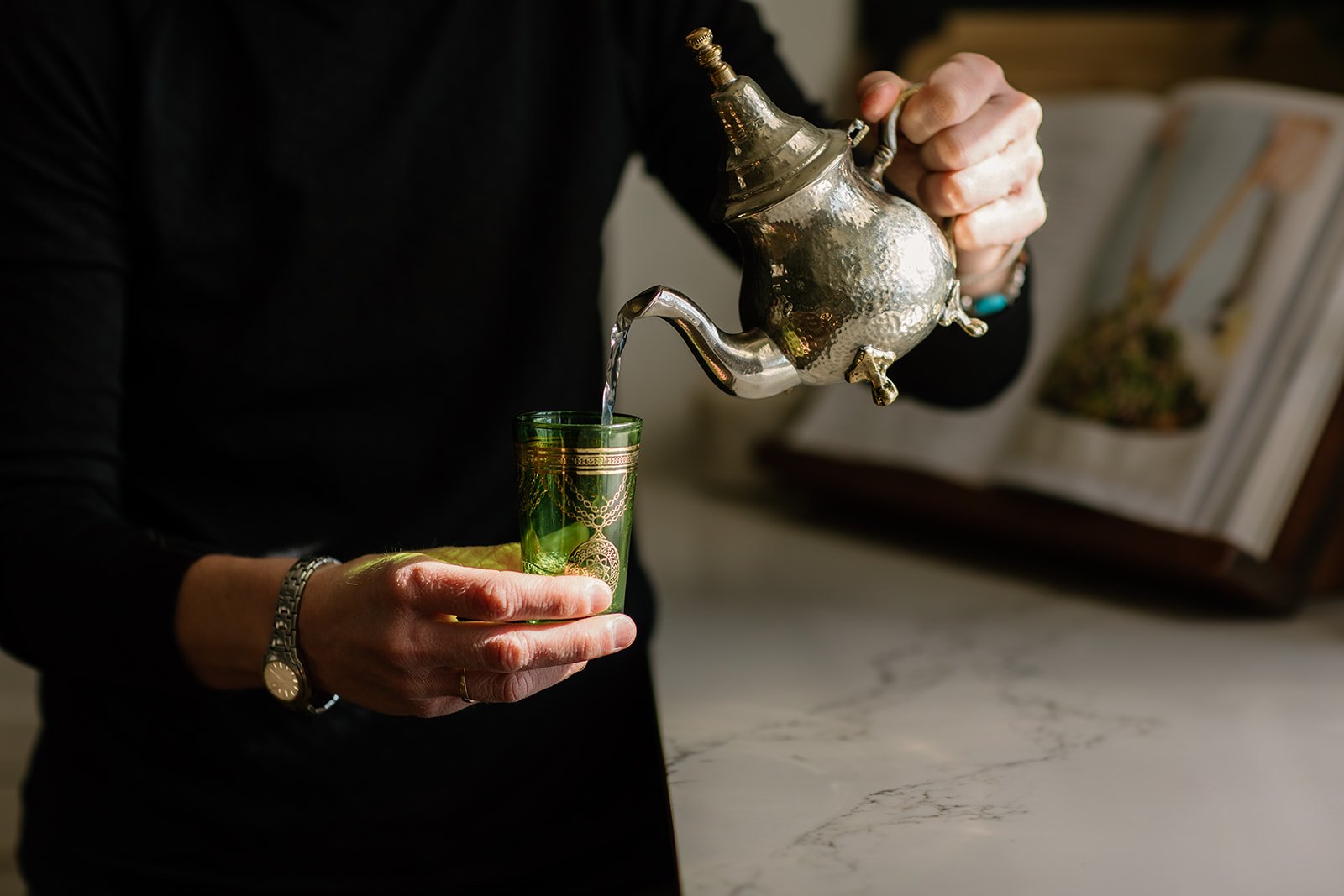
Discovering the artistry behind Morocco’s iconic silver berrad
It took just one day in Morocco for me to realize how central tea was to daily life. The true essence wasn’t simply in drinking it, but in everything that surrounded it. The ritual of preparation, the artistry of the teapots, and the quiet sense of welcome that came with every cup.
In Morocco, serving tea is more than a custom; it is a symbol of hospitality and genuine connection.
After an overnight stay in Casablanca, we began our journey inland. Our first stop was Fez - the spiritual and cultural capital of the West. Navigating the maze-like streets of the medina, we eventually reached our riad, a traditional Moroccan home built around an interior courtyard, though not without getting lost once or twice along the way.
We sat in the reception area while the formalities were completed. Our host soon returned with a tray of freshly brewed green tea, a generous pot of sugar, and a bundle of fragrant, fresh mint.
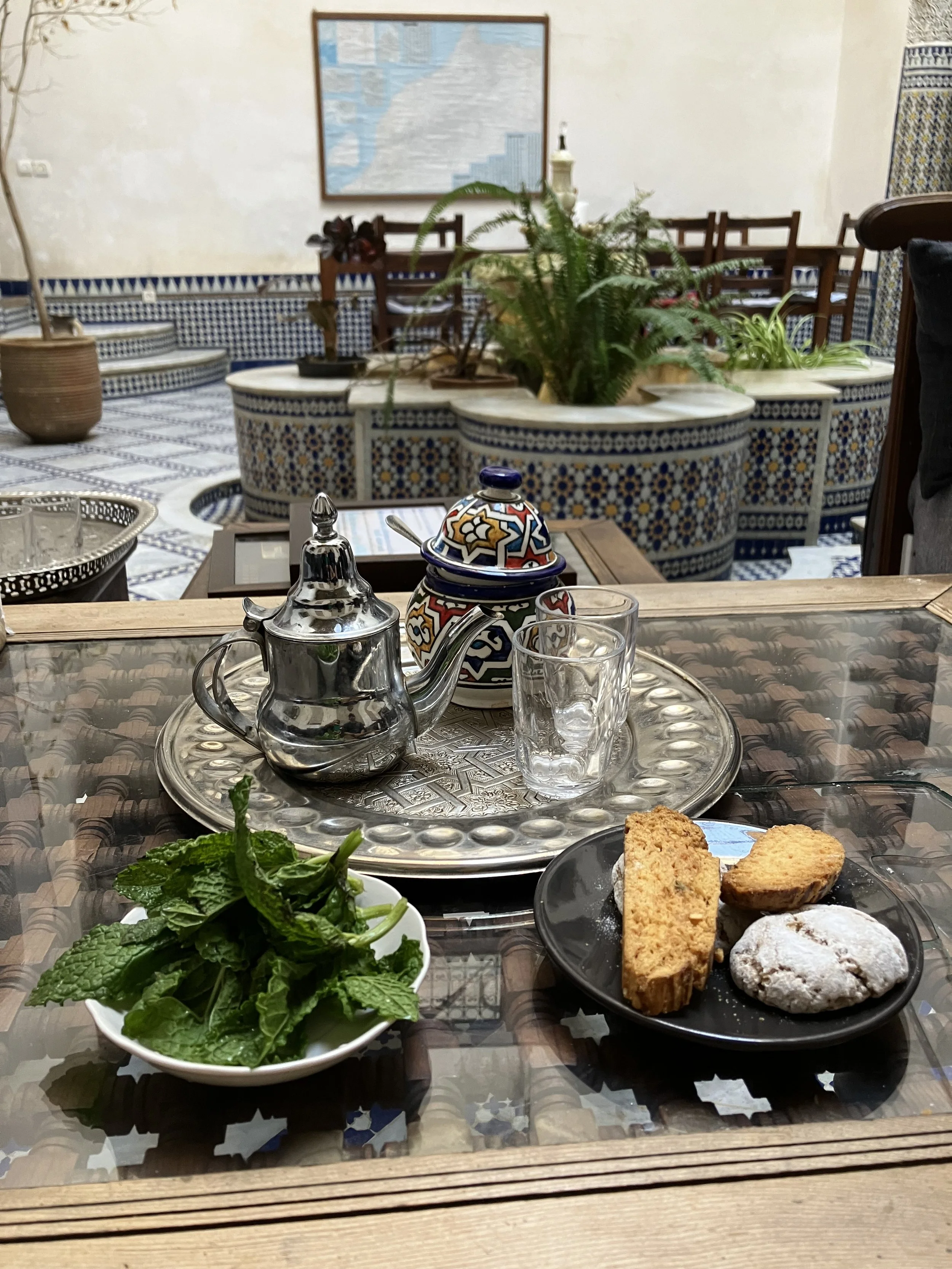
A tray of freshly brewed green tea, a generous pot of sugar, and a bundle of fragrant, fresh mint served at Dar Drissi in Fez.
Not knowing the perfect mint-to-sugar-to-tea ratio, we pretended to be experts, carefully adding leaves and sugar as though we had done so our whole lives. Until then, my only reference had been the premixed “Moroccan mint” blends sold in tea shops back home in Canada. This was something entirely different - alive, layered, and deeply aromatic.
Almost immediately, I began wondering where I might find an authentic Moroccan teapot, and how I would know which one to choose.
Craving a mint tea? Try our Soothing Organic Mint Tea HERE
Exploring Fez’s Medina in Search of a Berrad
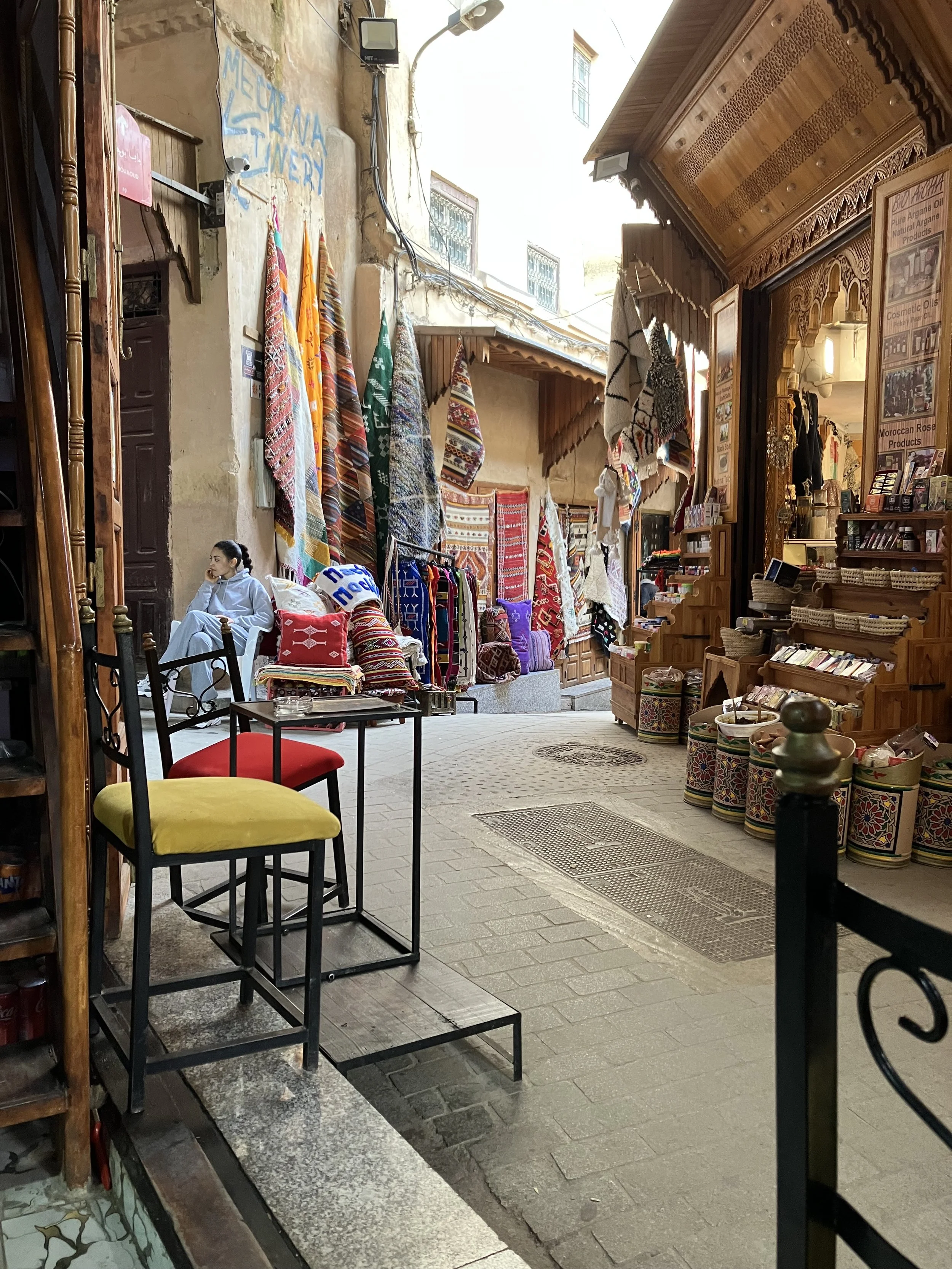
Wandring through Fez’s medina in search of an authentic berrad.
The next day, while wandering through the narrow passageways of Fez’s medina, I stepped into a small shop filled with handmade Berber objects. On one shelf, a collection of silver teapots, known locally as berrads, caught my attention.
As I examined them more closely, an older man approached and began explaining everything there was to know about Moroccan teapots.
Listening to him, I quickly realized that berrads are not merely decorative. They serve a distinct ritual purpose, carefully designed to support the art of Moroccan tea preparation.
How to Choose an Authentic Moroccan Berrad
He explained that subtle differences reveal whether a teapot is meant for serving, brewing, or simply displaying.
With or Without Feet
Some silver teapots have small feet on the underside, while others have flat bottoms. Teapots with feet are intended for serving and are not suitable for direct stovetop use due to their raised bases. If you plan to brew tea on a stovetop, a flat-bottomed teapot is necessary, as it provides stability and even heat contact.
I ultimately chose one with delicate feet, purely for its elegance. It felt ceremonial, as though it belonged in a ritual rather than on a burner.
Size Matters
Unlike the larger teapots commonly used in North America, authentic berrads are smaller in capacity, typically holding enough tea for two to six small glasses at a time. This compact size helps keep the tea hot and ensures each batch is brewed fresh.
This design reflects an important Moroccan principle: tea should be served flavourful and made to order, never left sitting too long.
A Local’s Guide to Authentic Moroccan Teapots
The old man offered one final piece of advice: be cautious when purchasing a berrad, as imitations are common.
During Covid, when local artisans were unable to produce handmade pieces, factory-made versions began appearing in Moroccan markets. Though similar at first glance, they lack the weight, craftsmanship, and subtle details of authentic berrads.
Here’s what he told me to look for:
1. Check the Weight
An authentic berrad feels unexpectedly heavy for its size. Genuine Moroccan teapots are typically crafted from brass, copper, or alpaca (nickel silver) - all denser metals than cheaper alternatives. True pieces are not magnetic and, over time, develop a natural patina.
2. Examine the Craftsmanship
Hand-hammered and hand-engraved teapots often display slight irregularities in their patterns. These small variations, asymmetry or differing engraving depths, are not flaws, but hallmarks of authentic, handcrafted work.
3. Notice the Spout Design
Authentic Moroccan teapots feature a long, slightly curved spout engineered for pouring from a height. This allows the tea to flow in a fine, aerated stream, enhancing both flavour and presentation while helping to prevent dripping.
4. Inspect the Lid
The lid should fit securely but remain loose enough to allow steam to escape during pouring. Many authentic berrads have a small internal lip designed to keep the lid from slipping off, even when tilted significantly.
5. Look Inside
The interior of an authentic teapot is typically plain metal, sometimes lined with a thin layer of tin for protection. Fine hammer marks or subtle textures inside are often a strong indication of artisan craftsmanship.
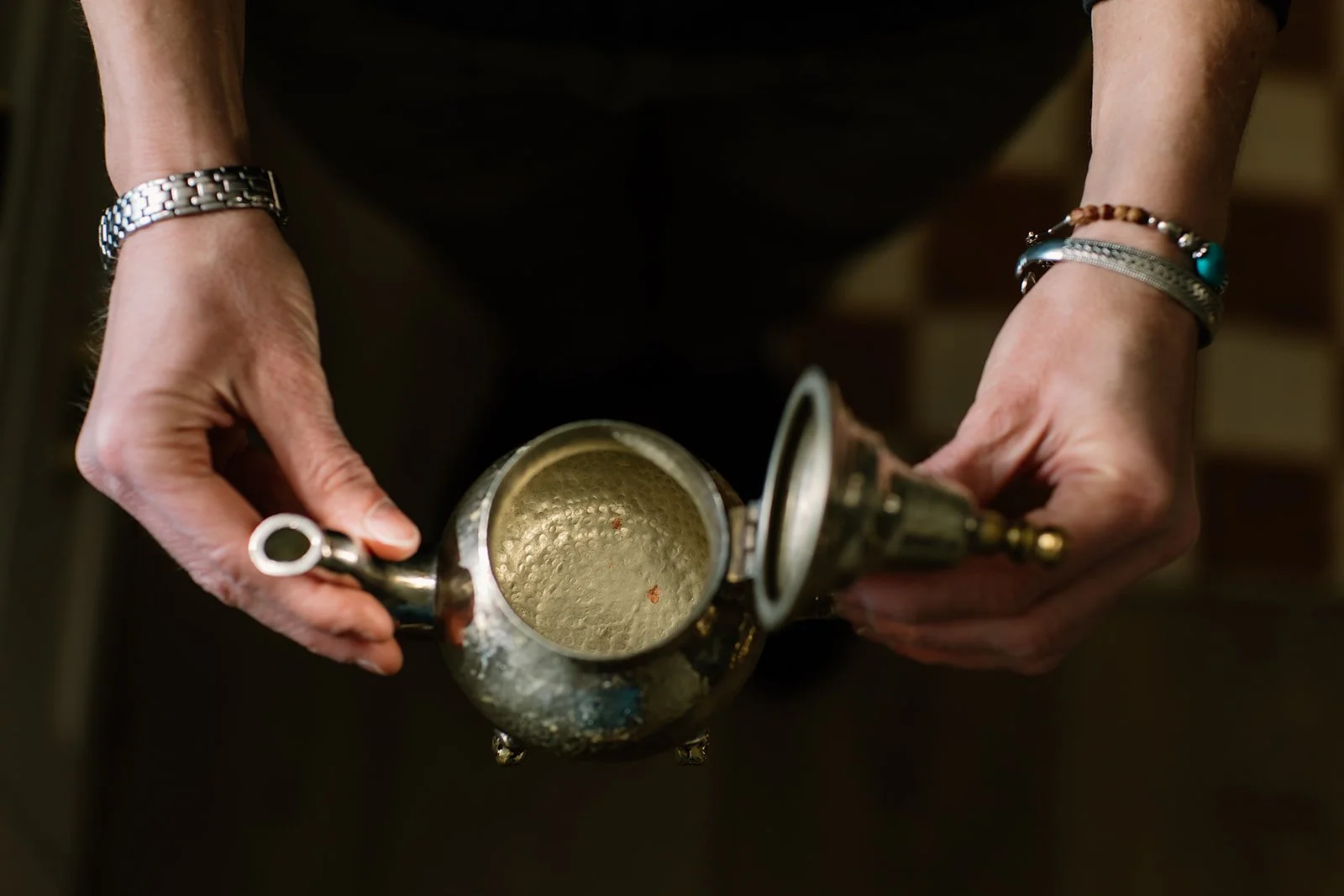
Fine hammer marks are often a strong indication of artisan craftsmanship.
6. Finally, consider the price
If it seems too good to be true, the teapot is likely not authentic. As a tea culture aficionado, I suggest spending a little extra to support local artisans and bring home a valuable Moroccan souvenir.
In Moroccan markets, bargaining is customary. Express genuine interest and ask politely if there is flexibility in price. This can open the door to respectful negotiation. Smile and approach the process with good humour, since it’s often seen as part of the cultural experience.
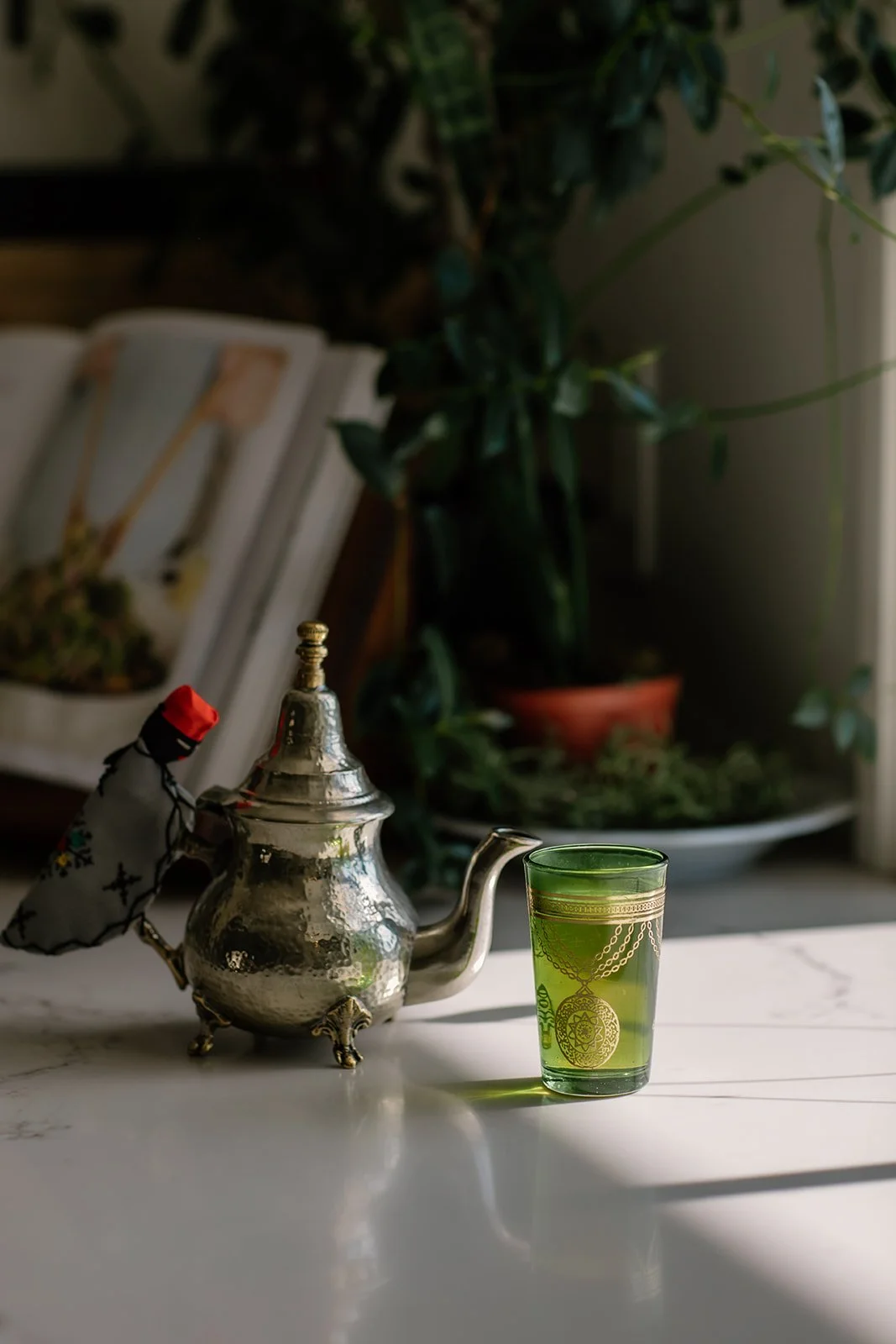
Coming back home with a gold and green tea glass, a handmade berrad and a cute Moroccan teapot cover handle made locally in Fez.
Bringing the Ritual Home
As my time in Morocco drew to a close, I realized that tea touched nearly every encounter I had. It was more than a drink - it acted as a bridge, connecting people, traditions, and cultures.
Bringing home my carefully chosen berrad felt like carrying a small piece of that ritual with me. Now, each time I pour tea from a height and watch the delicate stream fall into a glass, I’m reminded of the warmth and generosity I experienced in Morocco.
If you find yourself wandering through Morocco’s lively streets one day, don’t rush the tea. Embrace it. Let every sip draw you deeper into the country’s remarkable traditions - and perhaps bring a little of that ritual home with you.
Want more stories from my tea travels? You may also like:
Traveling for Tea: Drinking Atay in Morocco
Let’s Talk About Teaware: The Brown Betty